worldsteel expects 0.3% steel demand growth this year, names new director-general



Global demand for steel is estimated to grow by 0.3% this year to 1.72-billion tonnes, and by 2.2% in 2027 to reach 1.76-billion tonnes, global organisation World Steel Association (worldsteel) reports in its latest ‘Short-Range Outlook’.
“Global steel demand is bottoming out over the 2025 to 2026 period. This follows a protracted and challenging phase of global structural adjustments that has suppressed demand since 2022.
“We are now transitioning to a path of modest growth in 2026, with a more pronounced acceleration projected for 2027,” says worldsteel Economics Committee chairperson and Spanish Association of Companies Producing Steel and Primary Steel Processing Products UNESID chief economist Alfonso Hidalgo de Calcerrada.
This broader recovery is being driven by distinct shifts in regional dynamics. In China, the rate of demand contraction is finally decelerating this year, while demand growth across key developing markets, most notably India, remains vibrant.
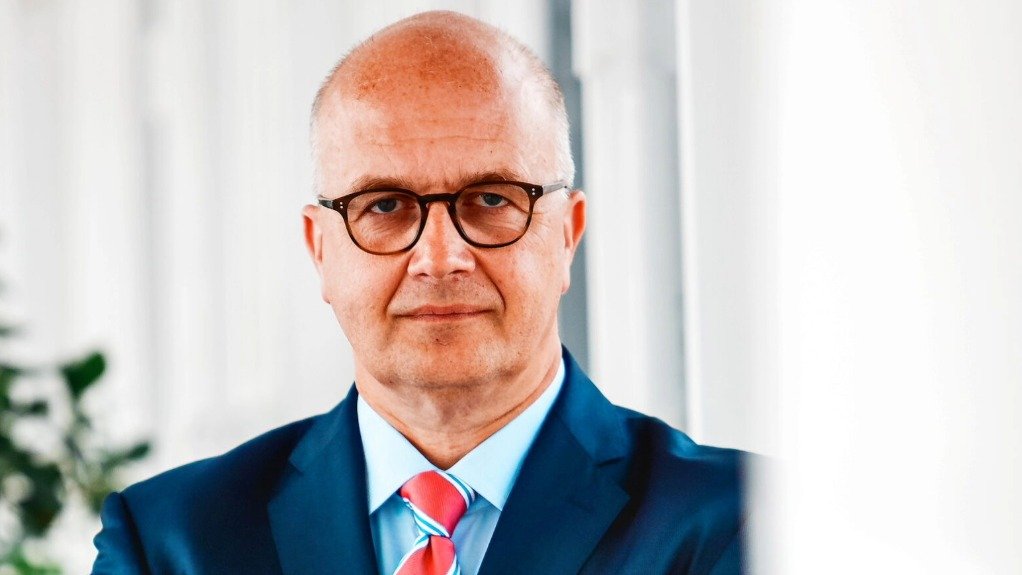
However, worldsteel, which has also announced that Dr Henrik Adam will succeed Dr Edwin Basson as director-general of the organisation from the fourth quarter of this year, expects the ongoing conflict in the Middle East to result in a sharp drop in that region’s steel demand for this year, which was otherwise positioned for strong growth.
Critically, the organisation anticipates a meaningful turnaround in the developed world as a whole.
“After a protracted period of decline, we expect to see all major developed economies, including the EU, the US, Canada, Japan and Korea, posting positive growth in 2027.”
Consequently, global steel demand, excluding China, is forecast to accelerate to a growth rate of 4% in 2027, which is a level that has rarely been seen in recent times.
While this outlook reflects data available as of mid-March, the escalating conflict in the Middle East presents a significant stress test, it notes.
“We expect steel demand in most major economies to remain resilient,” says Hidalgo de Calcerrada.
“Specifically, the US, China and India appear largely insulated from direct spillovers. Further, despite its high exposure, the EU has bolstered its systemic energy flexibility since the 2022 Russian invasion of Ukraine. The sharp divergence between the gas price peak in 2022 and current price levels illustrates a much more contained impact thus far.
“If hostilities persist beyond the second quarter, material downward revisions will be necessary, particularly for regions with high structural energy sensitivity,” he adds.
Steel demand growth across developing economies, excluding China, is projected to moderate to 2.5% this year, which is a significant deceleration from the about 5% annual growth recorded in recent years.
This cooling is primarily driven by a sharp contraction in the Middle East, where regional conflict has abruptly reversed previous growth expectations.
Further, the organisation anticipates a normalisation of demand across Association of Southeast Asian Nations economies. Following a strong expansion in 2025, growth in this region is expected to temporarily soften as stockpiling activity subsides.
However, the outlook for 2027 is more robust, with growth forecast to rebound to 5.1%. This resurgence will be fuelled by sustained momentum in developing Asia and Africa, complemented by an anticipated recovery in the Middle East.
For 2027, worldsteel projects Chinese steel demand to remain essentially flat relative to 2026 levels. This outlook is grounded in the expectation that the protracted real estate sector correction will have largely run its course by 2027, thereby mitigating the severe downward pressure that has dominated the industry since 2021.
Meanwhile, India maintains its position as the world’s fastest-growing major steel market, with demand projected to expand by 7.4% this year and accelerate to 9.2% in 2027.
This robust outlook is underpinned by broad-based strength across all key steel-consuming sectors. Growth is primarily driven by sustained, infrastructure-led construction and a thriving automotive sector fuelled by increasing freight demand.
A resilient capital expenditure cycle continues to bolster demand for capital goods, while nationwide rail network expansion and an affordability-driven surge in consumer durables provide additional structural tailwinds, worldsteel says in its report.
Further, a transformative shift has been under way across Africa since 2023, with clear indicators of a robust resurgence in construction activity and domestic steel consumption.
The latest forecasts validate this trajectory, projecting a 3.8% growth this year and 4.6% in 2027.
This sustained momentum reflects an intensifying focus on large-scale urbanisation, critical infrastructure development and economic diversification efforts, which positions Africa as an increasingly significant and resilient driver of the global steel market.
Steel demand in the developed world grew by 0.2% in 2025, which marks the end of a three-year consecutive decline since 2021.
The organisation expect this stabilisation to pave the way for a gradual recovery, with growth reaching 1% this year and gaining further momentum to 2.3% in 2027.
The 2025 market size remains about 60-million tonnes, or 15%, lower than the levels seen in 2017 to 2018, indicating that a full return to pre-crisis volumes is still a long-term endeavour, worldsteel notes.
The organisation expects the EU and UK region’s demand to grow 1.3% this year and 3% in 2027.
Further, steel demand in the US is projected to grow by 1.7% this year and 2% in 2027. This expansion is expected to be supported by strong, technology-driven and policy-backed private sector investment, along with continued public infrastructure spending.
DIRECTOR-GENERAL
Basson is retiring as director-general after 15 years of leading worldsteel.
Adam, who is currently executive chairperson of Tata Steel Netherlands, president of the European Steel Association EUROFER and chairperson of the Steel Institute in Germany, has more than 25 years of leadership in both the steel and automotive sectors, having held roles at Tata Steel Europe and thyssenkrupp, overseeing operations across production, research & development, sales, supply chain and strategy.
He served as CEO at Tata Steel Europe and CEO of Electrical Steel at thyssenkrupp, giving him more than 15 years of C-suite experience.
He will lead the association as director-general as of the middle of the fourth quarter.
Article Enquiry
Email Article
Save Article
Feedback
To advertise email advertising@creamermedia.co.za or click here
Research Reports

Projects


Latest Multimedia
Latest News

Showroom

ESAB South Arica, the leading supplier of high-end welding and cutting products to the Southern African industrial market is based in...
VISIT SHOWROOM
Developed to exceed the latest EN 15964 standards for police breathalysers proving that it will remain accurate and reliable for many years to come.
VISIT SHOWROOM
Announcements
What's On
Subscribe to improve your user experience...
Option 1 (equivalent of R125 a month):
Receive a weekly copy of Creamer Media's Engineering News & Mining Weekly magazine
(print copy for those in South Africa and e-magazine for those outside of South Africa)
Receive daily email newsletters
Access to full search results
Access archive of magazine back copies
Access to Projects in Progress
Access to ONE Research Report of your choice in PDF format
Option 2 (equivalent of R375 a month):
All benefits from Option 1
PLUS
Access to Creamer Media's Research Channel Africa for ALL Research Reports, in PDF format, on various industrial and mining sectors
including Electricity; Water; Energy Transition; Hydrogen; Roads, Rail and Ports; Coal; Gold; Platinum; Battery Metals; etc.
Already a subscriber?
Forgotten your password?
Receive weekly copy of Creamer Media's Engineering News & Mining Weekly magazine (print copy for those in South Africa and e-magazine for those outside of South Africa)
➕
Recieve daily email newsletters
➕
Access to full search results
➕
Access archive of magazine back copies
➕
Access to Projects in Progress
➕
Access to ONE Research Report of your choice in PDF format
RESEARCH CHANNEL AFRICA
R4500 (equivalent of R375 a month)
SUBSCRIBEAll benefits from Option 1
➕
Access to Creamer Media's Research Channel Africa for ALL Research Reports on various industrial and mining sectors, in PDF format, including on:
Electricity
➕
Water
➕
Energy Transition
➕
Hydrogen
➕
Roads, Rail and Ports
➕
Coal
➕
Gold
➕
Platinum
➕
Battery Metals
➕
etc.
Receive all benefits from Option 1 or Option 2 delivered to numerous people at your company
➕
Multiple User names and Passwords for simultaneous log-ins
➕
Intranet integration access to all in your organisation